Programmable Revenue Builder Edition·Issue 01·August 22, 2026
Running cold email infrastructure.
How graph8 builds and runs revenue infrastructure. For developers, engineers, and technical revenue leaders.
Contents 32 pages · 7 articles
p. 3 How a shared DNS cluster got our domains blocklisted before their first send
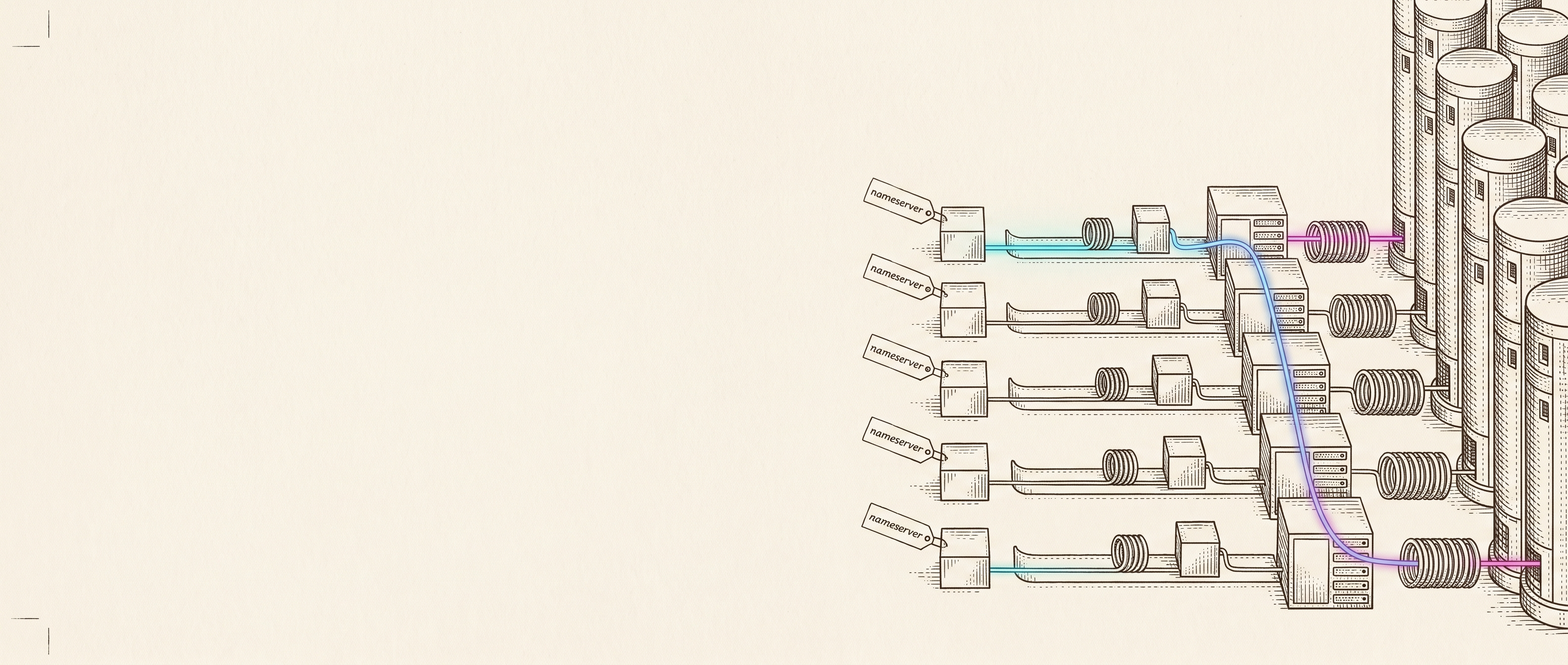
Sending domains started appearing on SURBL before they had sent anything. The cause was not the copy, not the domains, and not the volume. It was the DNS cluster they shared.
Field p. 8 SURBL checks your links, not your sender: why we removed every link from cold email SURBL evaluates the domains inside the message body, not the sending domain. One listed link affects every message carrying it. So we removed links from cold email, and each sending domain now serves its own page.
Field p. 12 Testing rented sending against our own: 16.8 versus 55.6 percent inbox placement Same list, same week, three sending setups, placement measured on our own seed inboxes. The third-party relay reached the inbox 16.8 percent of the time. The rented pool reached 55.6. Our own cluster beat both.
Field p. 16 Why we hold our own IPv4 ranges: email reputation accrues to whoever owns the address Warmup, domain age and sending history all accumulate against an IP address, and whoever owns that address owns the result. We hold our own IPv4 space across three isolated ranges, so changing host does not change the addresses.
Field p. 20 Fail closed: why unknown never counts as healthy in fleet capacity accounting Fleet capacity is a distributed-state problem: hundreds of domains whose status can be stale, missing, or wrong at read time. The design that keeps the number honest: explicit states, unknown never counts as clean, every rate ships its denominator, and sending halts when state cannot be read.
Field p. 25 The hot-partition problem, and how Discord beat it at trillion-message scale When one entity gets popular, one database partition takes the load meant for a fleet, and caching alone cannot save it. The clearest public answer is Bo Ingram's work at Discord: shape the traffic in a service you control, then change the engine.
Reported p. 29 The Postgres scale-out problem, and how Figma crossed it in ten seconds Every product that wins eventually outgrows one Postgres box, and every path out is expensive: NewSQL migration, middleware, extensions, or sharding logic smeared through the codebase. The standout answer is Sammy Steele's work at Figma: shard logically first, route in one proxy, rehearse until the irreversible step is seconds long.
Reported Author 
Thomas Cornelius CEO, graph8
Thomas writes the articles in this edition. Behind them stands the graph8 team: the infrastructure, AI, software, and machine learning engineers who build and run the systems these pages describe. The credit belongs to them.
Builder Spotlight
Two profiles close this issue: Bo Ingram of Discord and Sammy Steele of Figma. The section belongs to builders outside graph8, written from their own published work. If you have shipped infrastructure worth reading about, write to dev@graph8.com.
Read the spotlights → Illustrations graph8, original concepts for this issue. Cite this issue
graph8 (2026). Programmable Revenue Builder Edition,
Issue 01: Running cold email infrastructure. graph8.com/build/magazine.
Subscribe
Get every issue.
One email when a new issue ships. Nothing else.