What is AI sales coaching?
AI sales coaching is software that coaches sales reps in two ways: it scores their real calls, and it lets them practice with an AI that plays the prospect. Both give a rep feedback without waiting for a manager to find the time.
Call scoring works after the fact. The call is recorded and transcribed, and the AI grades it against a rubric: how much the rep talked versus listened, whether the objections were handled, whether a next step was agreed. Managers see where each rep needs work without listening to every recording.
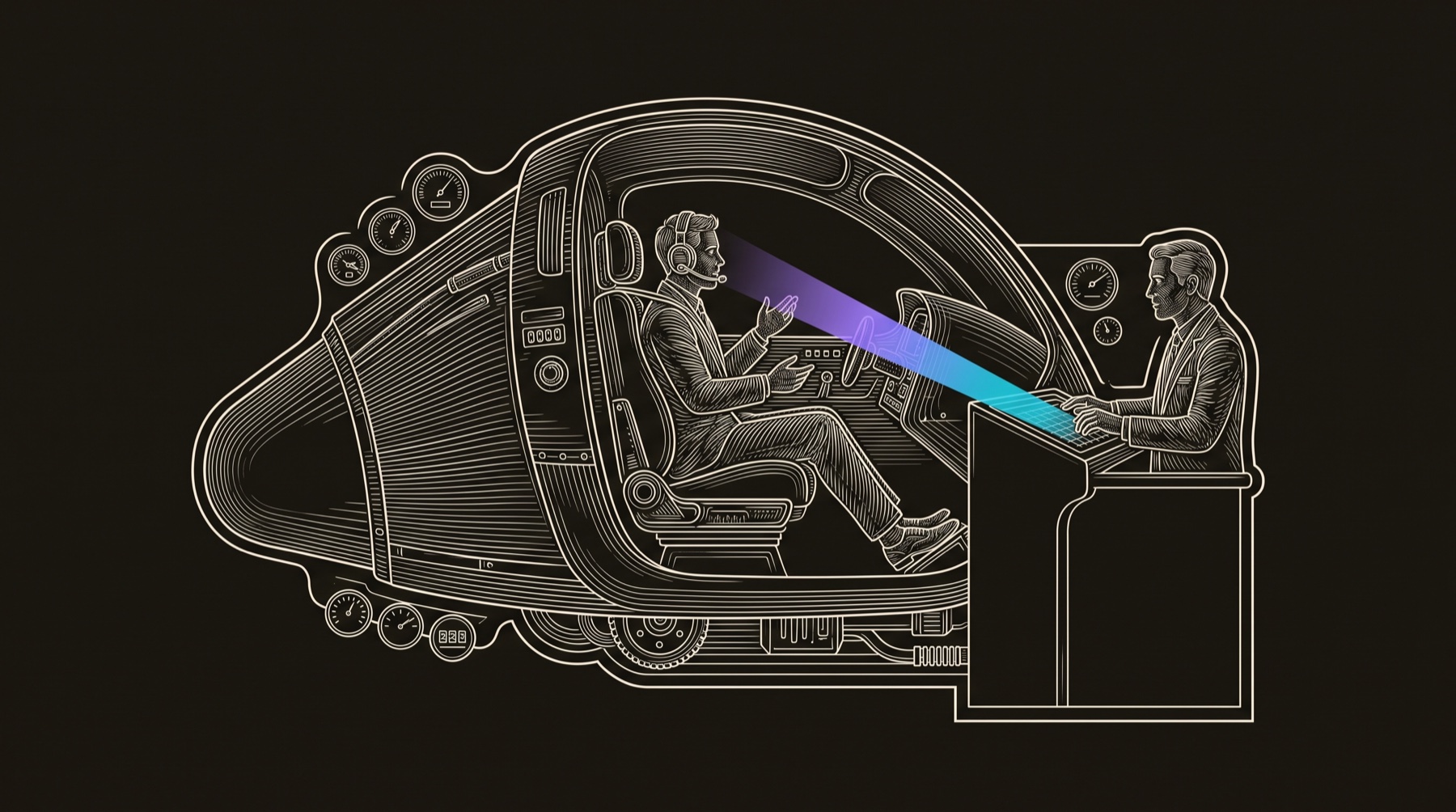
Roleplay works before the call. The rep talks to an AI persona with a role, a mood and a set of objections. The AI responds to what the rep actually says, then scores the attempt. The rep can run the same scenario again until it works.
Some tools add a third mode, live prompts during a real call. That is closer to assistance than coaching, and it is outside the scope of this article.
Why SDR coaching breaks at scale
The problem is time. One manager can listen to a handful of calls per rep per week. A team of SDRs makes hundreds of calls a day. Most calls are never reviewed, so habits form on live prospects, good ones and bad ones.
I saw this while scaling CIENCE from a handful of reps to more than 1,000 SDRs. Our managers spent hours on call recordings and still reached only a fraction of the calls. Two managers coached the same skill differently, and the difference showed up in their teams' numbers. The habits of our best reps stayed with those reps.
One new hire made the cost concrete for me. He had aced the interview and gone through the standard training: product knowledge, recorded calls and a day of mock calls with his supervisor. On his first real call, the prospect said "I'm too busy, what do you want?", and he froze. Nothing in his training had put him in that exact moment. That was not his failure. It was ours: our training could not give a new rep enough practice before the real thing.
What AI sales coaching can train
AI coaching is strong wherever a skill improves with repetition and can be scored against a clear standard.
| Skill | Why AI coaching works for it |
|---|---|
| The opener | Short, repeatable, easy to score. A rep can try ten openers in a few minutes |
| Common objections | The AI can raise "we already use someone", "send me an email" or "no budget" on demand, as often as needed |
| Discovery questions | The rubric can check whether the rep asked about the problem, the process and the timeline before pitching |
| Talk-listen balance | Measured directly from the transcript |
| Next steps | Easy to check: did the call end with a time, an owner and an agreed action? |
| Consistent messaging | Every rep is scored against the same playbook, so new hires do not inherit one manager's version |
A graph8 client used this for one objection its SDRs kept losing: "we already use a competitor". It set up an AI buyer who liked the current vendor. In the first rounds the AI brushed the reps off. It kept giving feedback, and by the fifth round one SDR found an angle that got a meeting in practice. When a real prospect raised the same objection, he said it felt familiar, and he booked the meeting. The AI did not teach him the angle. It gave him enough attempts to find it without burning real prospects.
The other gain is privacy. A rep can sound bad in practice without a manager or a peer listening, which makes it easier to try the call again, and again.
What AI sales coaching cannot train
AI coaching is weak wherever the right answer depends on context the AI does not have, or on judgment no rubric captures.
Deal and account judgment. Which accounts to push, when to stop, when to bring in an account executive. A score on one call says nothing about whether the account was worth the call.
The buying committee. B2B purchases involve several people with different stakes. An AI persona plays one person. It cannot show a rep that the champion has no budget authority, or that legal will block the deal, unless someone wrote that into the scenario.
The unexpected. Real prospects interrupt, change the subject, joke, get angry, or ask something nobody planned for. An AI persona is more polite and more predictable than a real one, so a good practice score can overstate how a rep will do live.
Motivation and career. Why a rep is struggling this month, whether they are in the right role, what they want next. That is a manager's job, and it is a large part of why reps stay.
Its own rubric. An AI scores what it was told to score. If the rubric rewards talking about features, reps learn to talk about features. Scores can also be gamed: reps learn what the model likes to hear. Someone has to check that high scores go with real outcomes.
So the split is simple. Give the AI the volume: every call scored, every common objection practiced. Give the manager the judgment: the flagged calls, the deals, the people.
| AI coaching | Manager | |
|---|---|---|
| Calls it can review | All of them | A sample |
| Available | Any time, unlimited repeats | A few hours a week per team |
| Best at | Repetition, consistency, measurement | Judgment, context, motivation |
| Weak at | The unexpected, deal strategy, buying committees | Coverage and consistency |
| Feedback speed | Immediate | Days, often |
How to roll out AI coaching for an SDR team
The rollout decides whether reps use it. A tool that feels like surveillance gets ignored or gamed.
- Tell the team what it is for. Explain that practice scores are for the rep, that call scores flag coaching moments, and what managers will see. When we first rolled out an AI coach at CIENCE in beta, we held open Q&A sessions where reps asked "Is this monitoring me?" and "What if it is wrong?", and answered them before anyone was scored.
- Build the scenarios from your own lost calls. Pull the five objections and moments where your reps most often lose the call. Those are the first practice scenarios, not a vendor's generic library.
- Build the rubric from your best reps. Score your top performers' calls and write down what they do: when they ask the first question, how they handle the main objection, how they ask for the meeting. That becomes the scorecard everyone is measured against.
- Make practice part of the day. A short practice block before call blocks works better than an optional library. New hires practice the scenarios before their first live calls.
- Spend manager time on what the AI flags. Managers review the calls the scoring flags and the reps whose scores are falling, instead of picking recordings at random.
- Check the scores against outcomes every quarter. If high-scoring calls do not book more meetings than low-scoring ones, the rubric is measuring the wrong thing. Fix it.
How to measure whether AI coaching works
Usage numbers come first and mean the least. That reps practiced tells you the rollout worked. It does not tell you the coaching did.
Measure the new-hire cohort that trains with AI against the cohort before it, on numbers that lead to pipeline:
- Days to first booked meeting, and days to the rep's full meeting target. This is the clearest ramp measure for SDRs.
- Meetings per connected call. Coaching should improve what happens once someone picks up, not how many dials a rep makes.
- Where calls end. If coaching targeted one objection, the share of calls lost at that objection should fall.
- Scores against outcomes. Practice and call scores should predict meetings. If they do not, see step 6 above.
- Manager hours. How much time managers spend on review, and whether it moved from random listening to flagged calls.
Give it a full quarter before judging the business result. A few weeks of data on a small team is mostly noise.
Where graph8 fits
The point of all this is a team that practices the hard call before it happens, and managers who spend their time where judgment matters. For tool lists, the market splits into call scoring, enablement suites and roleplay coaches, and many teams combine them.
graph8 Sales Coach is the Coach channel in the graph8 Dialer. It records, transcribes and grades every dialer call with an AI scorecard (talk-listen ratio, objections handled and next steps committed, with a rubric for SDR, AE or CSM calls), flags meetings for manager review, and lets reps practice with an AI that plays the prospect. Each practice call is scored and saved to the rep's call history.

The simulator was never the point. It is where a rep loses the hard call safely, so the real one is not the first time. The manager takes it from there.